Norovirus Outbreak in Massachusetts: Critical Cleaning Strategies to Protect Your Facility
With norovirus cases surging across Massachusetts, businesses and facilities face an urgent threat that can disrupt operations, harm reputations, and endanger employee and customer health.
Because the virus is extremely contagious and survives on surfaces for weeks, even a single case can affect your entire workforce.
The good news? With the right cleaning protocols and targeted disinfection, you can significantly reduce the risk of transmission.
In this guide, your trusted Boston cleaning company, Partner Facility Solutions, explains what you need to know about norovirus and why professional cleaning is your strongest defense during outbreaks.
What Is Norovirus and Why Is It Spreading in Massachusetts?
Norovirus, often called the “stomach flu” (though it’s unrelated to influenza), is experiencing a significant outbreak across Massachusetts. This highly contagious virus spreads rapidly in enclosed environments, making commercial facilities, healthcare settings, schools, restaurants, and office buildings particularly vulnerable. The virus causes severe gastroenteritis.
Common symptoms include:
Violent vomiting
Severe diarrhea
Stomach cramps
Nausea
Symptoms lasting 1-3 days
What makes norovirus especially dangerous for facilities is its resilience and transmission efficiency. While symptoms typically improve within 1–3 days, the virus spreads aggressively, often before someone realizes they are sick.
The Current Outbreak Impact
The current norovirus outbreak in Massachusetts is already disrupting daily life and operations across the state.
State health data also show that norovirus cases in Massachusetts have more than doubled compared with previous years, underscoring the virus’s increased activity during this season.
Norovirus is exceptionally contagious. It can survive on surfaces for days or even weeks, and only a tiny number of viral particles are needed to infect someone, making contamination of shared spaces like classrooms, offices, cafeterias, and restrooms a real operational threat.
And because the virus can spread through contaminated surfaces, food, and close person-to-person contact, even a single infected individual can lead to widespread transmission within hours.
For facility managers and business owners, this means norovirus is not only a health concern but a potential operational and reputational crisis—one that demands swift preventive action and rigorous cleaning protocols.
Why Professional Facility Cleaning Is Your First Line of Defense
With norovirus now disrupting schools, offices, and public facilities across Massachusetts, routine cleaning simply isn’t enough to stop transmission. Norovirus is exceptionally resilient; it can withstand many common disinfectants, including alcohol-based sanitizers that are effective against other viruses and bacteria.
This is why specialized disinfection is critical during an outbreak:
Norovirus resists most standard cleaners. Only EPA-registered disinfectants proven to kill norovirus can reliably eliminate it.
Correct application is essential. These products must remain on surfaces for a specific contact time to be effective.
Expert protocols matter. Trained teams understand the difference between cleaning, sanitizing, and disinfecting—distinctions that directly impact health and safety.
Cleaning removes dirt. Sanitizing reduces bacteria. But only proper disinfection neutralizes norovirus on high-touch surfaces such as doorknobs, elevator buttons, faucets, light switches, shared equipment, and bathroom fixtures.
At Partner Facility Solutions, we operate with the understanding that during an outbreak, every surface is a potential transmission point. Our emergency response teams use targeted, EPA-approved protocols designed specifically to break the norovirus’s chain of spread—quickly and with precision.
Essential Prevention Strategies: Keeping Norovirus Out of Your Facility
With norovirus spreading rapidly through Massachusetts schools, offices, and public spaces, and with professional deep cleaning now acting as your primary defense, the next step is prevention.
Prevention begins with understanding how norovirus enters and spreads through facilities. Most outbreaks begin when an infected person (whether an employee, customer, visitor, or vendor) enters your facility. Infected individuals shed billions of viral particles, contaminating surfaces and potentially releasing particles into the air during vomiting episodes. Because people are contagious before symptoms appear and for up to 48 hours after they stop, they can shed billions of viral particles while feeling completely normal.
When norovirus enters your facility, standard maintenance practices won’t contain it. During an active outbreak, your cleaning and prevention strategy is no longer routine maintenance; it becomes an essential operational safeguard. The following practices help facilities stay safe, functional, and resilient.
Implement Robust Hand Hygiene Protocols
Implementing robust hand hygiene protocols represents your most effective frontline defense. However, alcohol-based hand sanitizers, while convenient, are not effective against norovirus.
Facilities must emphasize proper handwashing with soap and water for at least 20 seconds, particularly after bathroom use, before food preparation or consumption, and after contact with potentially contaminated surfaces.
Placing handwashing stations or sinks in strategic locations, with clear signage promoting proper technique, reinforces this critical behavior.
Use EPA-Approved Disinfectants for Norovirus
Not all disinfectants kill norovirus. Facilities must use solutions registered with the EPA specifically for “Norovirus (Norwalk-like virus)”.
Partner Facility Solutions uses hospital-grade, EPA-listed disinfectants with proven efficacy. More importantly, our professional cleaning services adhere to proper dwell times, ensuring surfaces remain wet long enough for disinfectants to work effectively.
Increase Cleaning Frequency of Common Touchpoints
High-frequency cleaning and disinfection of common touchpoints throughout operational hours creates a continuous barrier against viral transmission.
Rather than waiting for end-of-day cleaning, facilities experiencing or aiming to prevent outbreaks should implement protocols in which high-touch surfaces are disinfected multiple times daily. This is where having day porter services can be especially beneficial. This includes door handles, handrails, shared equipment, point-of-sale terminals, shared phones, computer keyboards, and bathroom fixtures.
Remember: Use EPA-registered disinfectants with norovirus claims and follow manufacturer contact time instructions.
Deep Clean All Restrooms and Break Rooms
These areas are the most common contamination zones. Regular deep cleaning should include:
Disinfection of all surfaces and fixtures
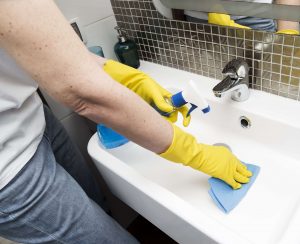
Sanitizing sink handles and faucet bases
Cleaning floors with effective disinfectants
Special handling of trash and sanitary waste
Regular replacement of hand soap, paper towels, and gloves
Pro tip: Restrooms and staff food areas require heightened attention during norovirus season.
Implement Proper Vomit and Accident Cleanup Protocols
Norovirus outbreaks often begin with a single vomiting incident.
Proper response includes:
Immediate isolation of the area
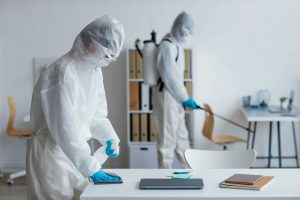
Use of PPE (masks, gloves, gowns)
Removal of organic matter
Application of EPA-approved disinfectant
25-foot radius cleaning when aerosolization is suspected
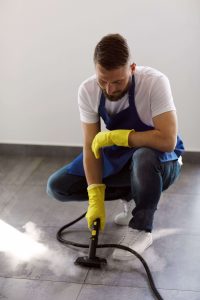
Norovirus clings to porous materials, including carpets, rugs, upholstered chairs, sofas, and curtains. These materials require hot water extraction or steam cleaning at proper temperatures to neutralize viral particles.
Ensure Environmental Safety Controls
Environmental controls also play important roles in prevention. Proper ventilation systems help reduce airborne particle concentration. Facilities should ensure bathroom exhaust fans function properly and that HVAC systems maintain appropriate air exchange rates.
In food service environments, strict food safety protocols prevent contamination of food items, which can serve as outbreak sources. Such protocols include: thorough cooking of shellfish (a common norovirus vector), preventing bare-hand contact with ready-to-eat foods, and immediately cleaning any spills or contamination events with appropriate disinfectants.
Staff Training: The Overlooked Step in Norovirus Prevention
Even the best cleaning plan fails if staff don’t understand basic prevention practices. Employees should understand norovirus symptoms, transmission methods, and the importance of staying home when ill.
Essential training topics during outbreaks:
Proper handwashing (20 seconds, warm water, soap)
When to stay home (especially after vomiting or diarrhea)
How to avoid cross-contamination
Correct glove usage
Safe food-handling procedures
Immediate reporting of incidents
Critical policy: Employees should remain home for at least 48 hours after symptoms stop, as they can still spread the virus during recovery. Cross-training staff to cover absences removes pressure to work while sick.
Critical Action Steps When Norovirus Strikes Your Facility
Despite prevention efforts, facilities may still experience norovirus incidents. Rapid, decisive response determines whether you contain a single case or face a full outbreak. The moment you learn of a symptomatic individual in your facility, take immediate action.
Step 1: Isolate and Restrict Access to the Affected Area
First, isolate the affected area and restrict access. If vomiting or diarrhea occurred in your facility, that area is now heavily contaminated and represents an extreme transmission risk.
Ideally, close off the affected space for at least two hours before cleaning, as this allows larger droplets to settle and reduces aerosolization risk during cleanup. Post clear signage directing people away from the contaminated area.
Step 2: Contact Cleaning Experts for Help
Contact a professional, commercial cleaning service that is experienced in outbreak response immediately. Standard janitorial staff typically lack the training, equipment, and EPA-registered disinfectants needed for safe, effective norovirus decontamination.
Step 3: Employ Specialized and Enhanced Cleaning Protocols
Professional cleaning teams follow strict protocols. Bodily fluids contain billions of viral particles requiring specialized handling. Professional teams use proper PPE, carefully remove contaminated materials, apply certified disinfectants with appropriate contact times, and dispose of materials according to regulations.
Beyond the immediate site, infected individuals likely touched surfaces throughout your facility. All high-touch surfaces like door handles, elevator buttons, handrails, shared equipment, and bathroom fixtures require thorough disinfection with norovirus-specific products.
Step 4: Notify Building Occupants
Communication becomes critical during outbreak response. Facilities should notify building occupants about the incident without creating panic, emphasizing enhanced cleaning measures being implemented and reinforcing hand hygiene importance.
In regulated environments like healthcare facilities or schools, notification requirements may extend to health departments and regulatory agencies.
Key principle: Transparency coupled with visible action maintains trust and encourages cooperation with prevention measures.
Why Partner Facility Solutions Is Your Trusted Outbreak Response Partner
Here are the key advantages you get when you partner with us:
EPA-Approved Disinfection Solutions: We use disinfectants specifically validated for norovirus elimination, many of which are not available to the public.
Advanced Cleaning Equipment: We have invested in advanced cleaning equipment, including electrostatic sprayers, HEPA filtration units, steam and extraction tools, commercial-grade PPE, as well as containment and isolation barriers.
Rapid Response for Outbreaks: Our outbreak response teams understand that during a norovirus event, every minute counts. We mobilize quickly, arriving with specialized equipment and hospital-grade disinfectants specifically proven effective against norovirus.
Proper Dwell Times and Application Methods: Our technicians know exactly which surfaces need targeted focus and how long disinfectants must remain wet to work.
OSHA– and CDC-Compliant Procedures: Our protocols meet standards for healthcare facilities, schools, businesses, government buildings, and food-handling environments. We don’t just clean surfaces—we eliminate viral threats using scientifically validated methods.
Facility Maintenance: Beyond emergency response, Partner Facility Solutions provides ongoing facility maintenance programs that incorporate outbreak prevention into daily operations. We also develop customized protocols addressing your specific environment, traffic patterns, and risk factors.
Partner Facility Solutions brings experience in managing outbreaks, contamination events, and emergency response cleaning, giving organizations peace of mind during high-risk periods.
Protect Your Facility Today—Don’t Wait for an Outbreak
The norovirus outbreak currently affecting Massachusetts represents a clear and present danger to facilities throughout the region. Whether you’re responding to an active incident, implementing enhanced prevention protocols, or seeking a trusted partner for ongoing protection, Partner Facility Solutions stands ready to safeguard your facility, your people, and your operations.