Did you know that an appropriate level of lighting can influence people’s perception of public spaces?
Imagine walking into two identical office buildings. Both were cleaned the night before. One feels bright, modern, and spotless, but the other feels dull, dated, and slightly neglected.
The difference is often not the cleaning, but rather the lighting. Lighting changes how people perceive cleanliness, safety, and professionalism long before they consciously evaluate a space. For Boston facility managers, this distinction matters far more than most realize.
Read on to learn why lighting is a critical partner to cleanliness, and a key driver of how your workplace is experienced.
Why Lighting Has Become Part of Modern Facility Management
Historically, facility management operated in silos. Lighting was an electrician’s concern, cleaning was a janitorial function, and maintenance was handled separately. Each operated independently, rarely connecting the dots.
Today, forward-thinking facility managers increasingly recognize that these systems work together as an integrated workplace strategy.
Commercial cleaning services in Boston report that lighting directly impacts their ability to deliver quality results. When visibility improves, cleaning teams identify problems faster.
When lighting is poor, dust, fingerprints, and stains remain hidden until they become obvious, and problematic.
Facility maintenance in Boston now includes lighting as a core consideration alongside cleaning and safety protocols. This shift reflects a broader understanding: the buildings that perform best are those where every system supports the others.
Does Better Lighting Actually Make a Workplace Look Cleaner?
Yes. Lighting dramatically affects how people perceive cleanliness, often more than the actual cleanliness level itself. Two equally clean offices can create completely different first impressions depending entirely on the quality of lighting.
Here’s why:
- Brighter spaces with high-quality lighting feel more open, airy, and transparent, qualities we subconsciously associate with cleanliness.
- Poor lighting creates shadows and reflections, hides dust, and makes even spotless offices feel neglected. The psychology is straightforward: brighter environments feel cleaner, safer, and more professional.
- Color rendering also matters significantly. LED lighting that reproduces colors accurately makes floors shine, glass sparkle, and surfaces appear pristine. Older fluorescent lighting casts a yellow or greenish hue that makes even clean spaces feel dingy.
Your Boston cleaning company could deliver identical service to both buildings, yet visitors would perceive one as significantly cleaner based purely on how light reveals or hides surfaces.
How Better Lighting Improves Cleaning Quality
Cleaning professionals can only clean what they can clearly see. This fundamental principle makes lighting essential to cleaning effectiveness.
LED lighting helps janitorial teams identify:
- Dust on surfaces and corners
- Fingerprints on glass and fixtures
- Spills and stains on floors
- Carpet wear and discoloration
When your office cleaning services in Boston operate under bright, properly positioned lights, they catch details that poor lighting obscures. This results in more thorough cleaning, better quality assurance, and fewer complaints about missed areas.
Better lighting also allows commercial cleaning teams to inspect their own work before completing tasks. This self-monitoring capability transforms cleaning from a checklist exercise into a quality-driven process.
Lighting’s Hidden Impact on Workplace Safety
Poor lighting contributes to preventable workplace accidents. Safety and lighting are directly linked.
Inadequate illumination creates hazards in predictable ways:
- Stairways without proper lighting become trip hazards
- Entrances with glare or shadows hide ice, water, or debris
- Parking areas with inconsistent lighting increase slip and fall risks
- Wet floor signage is less effective when the floor itself is hard to see
- Emergency exits must be clearly visible under all conditions
Facility maintenance teams in Boston must address lighting as a safety priority, not an afterthought. In fact, research from the Occupational Safety and Health Administration confirms that proper workplace lighting reduces accident rates and improves employee confidence navigating facilities.
Employee Experience Starts With Visibility
Most research articles discussing workplace lighting stop at productivity metrics. But employee experience extends far deeper than output statistics.
Lighting directly influences:
- Mood—daylight-balanced lighting improves alertness and reduces afternoon fatigue
- Eye strain—proper illumination reduces squinting and headaches
- Fatigue—consistent lighting supports circadian rhythms, especially in windowless spaces
- Confidence—employees feel safer and more valued in well-maintained environments
- Comfort—adjustable lighting lets individuals optimize their workspace
Interestingly, employees often interpret bright, well-maintained environments as organized, professional, and safer. Good lighting demonstrates that management cares about workspace quality.
Commercial office cleaning and janitorial service providers in Boston notice this dynamic firsthand. Teams spend more time observing facilities than almost anyone else. They see which spaces feel welcoming and which feel tired. And often, the difference is lighting, not dust.
Why Visitors Judge Cleanliness Through Lighting
Visitors rarely inspect cleanliness objectively. Instead, they subconsciously ask: “Does this place feel clean?” Lighting amplifies or diminishes this perception dramatically.
- A bright lobby feels successful, trustworthy, and well-managed.
- A dim hallway feels neglected, even if it’s recently cleaned.
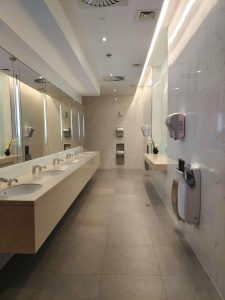
- A well-lit restroom feels hygienic; a poorly lit one feels questionable, regardless of actual cleanliness.
- Glass surfaces reflect light, or absorb it. The difference comes between “sparkling clean” and “smudged.”
For commercial cleaning in Boston to deliver maximum impact, lighting must support and enhance cleaning efforts. When day porter services maintain visibility throughout the day (checking lighting alongside cleanliness), they protect your facility’s reputation in real time.
The Energy Conversation Is Only Part of the Story
Yes, LED lighting saves energy. Yes, LEDs last longer and reduce maintenance costs. And yes, the utility bill benefits are real.
But the ROI of smarter lighting extends far beyond kilowatt-hours:
- Better visibility improves cleaning quality
- Improved safety lowers incident risk and liability
- Stronger first impressions attract and retain clients
- Employee comfort reduces absenteeism and improves morale
Facility managers evaluating LED lighting upgrades should calculate total facility benefit, not just energy savings. The complete ROI includes operational improvements that financial spreadsheets often overlook.
Smart Facility Managers Evaluate Lighting and Cleaning Together
Leading facility managers ask integrated questions when assessing their workplaces:
- Can staff see dirt and identify cleaning needs immediately?
- Can visitors safely navigate entrances and stairwells?
- Are restrooms bright enough to appear sanitary?
- Can cleaning teams inspect their work and verify quality?
- Are parking areas and outdoor spaces adequately illuminated?
- Do employees feel confident moving through the facility?
These questions reveal that lighting and cleaning are interconnected systems. Day porter services that monitor facilities throughout the day often notice lighting issues before anyone else, often providing early warning about problems.
Signs Your Facility May Have a Lighting Problem
Consider this checklist:
- Employees frequently complain about eye strain or fatigue
- Your lobby or entryway feels dark or dated
- Restrooms appear dirty despite regular cleaning
- Carpet stains seem more visible than they should be
- Visitors comment that the building feels older
- Parking lot visibility concerns employees
- Cleaning inspections regularly identify missed areas
- High-traffic walkways have shadowed or dim sections
If your facility exhibits multiple signs, lighting upgrades should be a priority. Partner these improvements with your commercial cleaning services in Boston to maximize impact.
Why Professional Cleaning Companies Notice Lighting Problems First
Cleaning teams spend more time observing facilities than almost anyone else. They work during various times of day, under different lighting conditions, and examine surfaces closely. They notice:
- Burned-out fixtures and dark zones
- Shadows obscuring areas requiring cleaning
- Visibility issues in stairwells and hallways
- Safety concerns in poorly lit parking areas
- Fingerprints and smudges become more visible under poor lighting
This positions professional janitorial services as early warning systems for facility problems. When your Boston janitorial services report lighting concerns, those observations deserve priority attention.
Integrating Lighting Into Your Facility Cleaning Strategy
Great facilities don’t happen because every system works independently. They excel because lighting, maintenance, safety, and cleaning all work together to create spaces that are healthier, safer, and more welcoming.
For Boston businesses, investing in smarter lighting isn’t just about reducing energy costs. It’s about improving how your workplace functions and how it’s experienced every day. Bright, well-maintained facilities attract talent, impress clients, and support your team’s wellbeing.
At Partner Facility Solutions, we help Boston facilities recognize that lighting and cleaning are interconnected systems. Strategic lighting improvements make safety protocols more effective. Together, these investments transform workplaces.
Schedule a free consultation to evaluate how lighting and cleaning strategies can work together to improve your workplace.
FAQs
Does LED lighting make a workplace look cleaner?
Yes. Brighter, higher-quality lighting improves visibility, making surfaces appear cleaner while helping identify dirt, dust, and spills that might otherwise go unnoticed.
How does lighting affect workplace safety?
Proper lighting improves visibility, reduces trip and fall risks, enhances emergency egress, and helps employees safely navigate entrances, stairwells, hallways, and parking areas.
Can lighting improve commercial cleaning results?
Absolutely. Better lighting allows cleaning professionals to spot dust, fingerprints, stains, and other areas requiring attention, resulting in a more thorough and consistent clean.
Should facility managers consider lighting as part of a maintenance strategy?
Yes. Lighting, cleaning, and facility maintenance work together to improve safety, operational efficiency, employee experience, and the overall appearance of a commercial building.
Why do clean offices sometimes feel dirty?
Poor lighting can make even spotless spaces feel neglected or unclean. Visitors subconsciously judge cleanliness based on how spaces feel and look under available lighting. Bright, warm lighting makes identical spaces feel significantly cleaner and more professional.