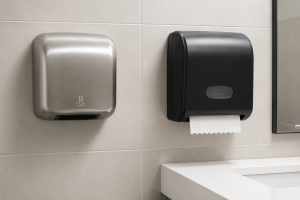
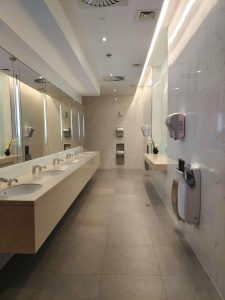
Common spaces within your office communicate your standards faster than any mission statement hanging on your wall.
Restrooms are high-touch, high-visibility spaces that people will judge instinctively. The little details matter, not only in terms of cleanliness but also in the overall experience. Is the paper towel dispenser always empty? Does the hand dryer work properly? Are supplies restocked consistently? These seemingly minor elements convey powerful signals about how your business operates.
If you’re investing in office cleaning in Boston, it’s not just about hygiene. It’s about what your workplace environment communicates.
What Do Hand Dryers and Paper Towels Actually Signal?
The choice between hand dryers and paper towels reveals what your organization values and how you make decisions about employee and guest experience. It’s not just about hygiene preferences.
Hand dryers often signal:
Sustainability focus and environmental commitment
Cost efficiency and long-term operational thinking
Modern infrastructure and technology adoption
Willingness to prioritize broader goals over immediate convenience
Paper towels often signal:
Hygiene priority and user comfort
Speed and convenience for high-traffic environments
Attention to tactile experience and sensory preferences
Responsiveness to employee feedback about daily frustrations
Neither choice is inherently superior. Both communicate something about your workplace culture and what you’re willing to optimize for when making facility decisions.
The Culture Behind the Choice
The restroom drying method you select reflects deeper patterns in how your organization makes decisions and what you prioritize when employee and guest experience conflicts with operational efficiency.
Detail-oriented companies that invest heavily in workplace experience often choose paper towels because they’ve listened to employee feedback about slow dryers, noise levels, and the psychological discomfort of waiting.
Cost-driven or efficiency-first organizations tend to prefer hand dryers, prioritizing long-term cost savings and operational scale over individual preferences.
Premium environments (like law firms, financial services, and consulting practices) typically maintain paper towels, recognizing that restroom experience signals overall quality and reinforces their brand.
The ultimate decision is not just about drying hands. It’s about whether leadership views facility choices through the lens of employee and guest comfort, operational efficiency, sustainability commitments, or client perception. And in Boston offices where these audiences overlap constantly, the choice becomes more complex.
Employee Experience: The Overlooked Impact
In most cases, restroom design and maintenance are rarely included in employee engagement strategies, but they should be. That’s because restroom experience directly impacts employee and guest comfort and perception of workplace quality, in ways that affect daily satisfaction and long-term retention.
Consider this:
An empty paper towel dispenser leads to frustration and a poor impression.
The frustration with slow hand dryers isn’t trivial when it happens multiple times daily.
Employees standing for 45 seconds under a weak dryer while colleagues wait behind them experience a small but repeated reminder that their time and comfort weren’t prioritized in facility planning.
Over months and years, these micro-frustrations compound.
Employees now notice when restrooms feel neglected: when soap dispensers are empty, when paper towel dispensers jam, when dryers accumulate visible grime. They don’t necessarily articulate these frustrations in surveys, but they feel them.
Conversely, consistently clean restrooms build a sense of care and professionalism. In fact, the psychological impact of well-maintained spaces extends beyond hygiene. Consistent restocking, functional equipment, and visible cleanliness create an environment where employees feel their workplace meets professional standards.
The Real Problem Isn’t the Equipment, It’s the Maintenance
The biggest hygiene issue in Boston offices is not the drying method; it’s inconsistent cleaning and maintenance that undermines whichever system you’ve chosen.
For example:
Overflowing waste bins beside paper towel dispensers pose sanitation concerns that undermine any hygiene benefits the towels provide.
Broken dryers that employees avoid create bottlenecks and frustration regardless of sustainability benefits.
Dirty dryer vents that blow contaminated air defeat the purpose of hand-washing entirely.
Day porter services monitor restrooms throughout business hours to catch problems before they become noticeable. Empty dispensers get restocked before the rush, malfunctions get reported immediately, and cleanliness standards remain consistent rather than degrading between nightly janitorial visits.
Sustainability vs. Practicality: What Boston Businesses Are Balancing
Boston companies increasingly face pressure to align facility decisions with environmental, social, and governance goals while maintaining workplace standards employees expect.
Paper Waste
Statistics show that the U.S. market consumes about 13 billion pounds of paper towels yearly, and is anticipated to grow.
Hand dryers reduce paper waste significantly—thousands of pounds annually in medium-sized offices. For organizations with public sustainability commitments or ESG reporting requirements, eliminating paper towel consumption represents measurable progress toward waste reduction targets.
Comfort & Health
However, modern employees also expect workplaces that prioritize their comfort and health. In fact, employees’ productivity is tied to clean workspaces.
When sustainability choices create daily frustrations or perceived hygiene compromises, the cultural message becomes complicated. Are we optimizing for external reporting metrics or internal experience quality?
Energy Costs
Energy usage presents another variable. High-efficiency hand dryers consume less electricity than older models, but they still represent ongoing energy costs, while paper towels carry ongoing supply and disposal costs. The true environmental calculation depends on your specific equipment, usage volume, and local waste management infrastructure.
Boston businesses navigating these trade-offs often find that the “right” answer depends on building type, employee demographics, and organizational values. A life sciences company with strict contamination protocols may prioritize paper towels despite sustainability goals. A tech startup with strong environmental branding may accept employee complaints about dryer wait times as aligned with broader mission commitments.
What Clients and Visitors Notice (Even If They Don’t Say It)
Restrooms function as a proxy for overall operational quality.
Why?
Because they’re unfiltered.
A well-maintained restroom with functional equipment, adequate supplies, and visible cleanliness suggests operational discipline. Visitors assume that if you maintain standards in spaces customers don’t see, you likely apply similar attention to core business functions.
Conversely, neglected restrooms with empty dispensers, broken equipment, or visible grime signal potential operational gaps. Clients won’t necessarily articulate this impression, but it influences their perception of whether your organization maintains professional standards across all functions.
The specific drying method matters less than the overall experience. Commercial cleaning services in Boston that work with client-facing businesses understand this dynamic. The restroom isn’t just a hygiene space. It’s a component of your brand experience that requires the same level of consistency you’d apply to reception areas or conference rooms.
A Smarter Approach: Aligning Hygiene with Workplace Standards
Rather than debating which drying method is objectively superior, forward-thinking Boston offices choose based on how well each option aligns with their specific operational context and employee expectations.
Consider traffic volume: High-traffic offices may require faster turnover solutions and more frequent maintenance.
Evaluate business type: Client-facing environments often benefit from higher perceived comfort and cleanliness.
Survey employee expectations: Workplaces with a strong focus on employee experience should minimize friction wherever possible.
Match cleaning frequency: Your setup should match your ability to maintain it consistently.
Ultimately, the best choice should be based on an honest assessment of your priorities rather than generic best practices imported from different contexts.
A consistently positive experience for employees and visitors
Remember: your cleaning partner should function as an extension of your workplace standards, ensuring that restroom experience reflects the culture you’re trying to build rather than undermining it through inconsistent maintenance.
Culture Is Built in the Details
Workplace culture isn’t defined by mission statements or branding decks on conference room walls; it’s reflected in everyday experiences, especially the spaces people use most frequently and judge most instinctively.
The hand dryer versus paper towel debate misses the larger point. The choice matters far less than the consistency with which it’s maintained.